Keynote Speaker
|

|
Prof. Steven Guan, Xi’an Jiaotong-liverpool University, China
Steven Guan (Sheng-Uei Guan) received his BSc. from Tsinghua University and M.Sc. & Ph.D. from the University of North Carolina at Chapel Hill.
He is currently an Honorary Professor at University of Liverpool & also a Professor at Xi'an Jiaotong-Liverpool University (XJTLU). He served the head of department position at XJTLU for 4.5 years, creating the department from scratch and now in shape. Before joining XJTLU, he was a tenured professor and chair in intelligent systems at Brunel University, UK.
Prof. Guan’s research interests include: machine learning, computational intelligence, big data analytics, mobile commerce, modeling, networking, personalization, security, coding theory, and pseudorandom number generation. He has published extensively in these areas, with 140+ journal papers and 210 book chapters or conference papers. He has chaired, delivered keynote speech for 100+ international conferences and served in 190+ international conference committees and 20+ editorial boards.
|
|
|

|
Prof. Philippe Fournier-Viger, Shenzhen University, China
Philippe Fournier-Viger (Ph.D) is a Canadian researcher, distinguished professor at Shenzhen University (China). Five years after completing his Ph.D., he came to China in 2015 and became full professor after receiving a talent title from the National Science Foundation of China. He has published more than 375 research papers related to data mining algorithms for complex data (sequences, graphs), intelligent systems and applications, which have received more than 11,000 citations. He is the founder of the popular SPMF data mining library, offering more than 250 algorithms to find patterns in data, cited in more than 1,000 research papers. He is former associate edito-in-chief of the Applied Intelligence journal and has been keynote speaker for over 15 international conferences and co-edited four books for Springer. He is a co-founder of the UDML, PMDB and MLiSE series of workshops held at the ICDM, PKDD, DASFAA and KDD conferences.
Title: Advances and challenges for the automatic discovery of interesting patterns in data
Abstract: Intelligent systems and tools can play an important role in various domains such as for factory automation, e-business, and manufacturing. To build intelligent systems and tools, high-quality data is generally required. Moreover, these systems need to process complex data and can yield large amounts of data such usage logs, images, videos, and data collected from industrial sensors. Managing the data to gain insights and improve these systems is thus a key challenge. It is also desirable to be able to extract information or models from data that are easily understandable by humans. Based on these objectives, this talk will discuss the use of data mining algorithms for discovering interesting and useful patterns in data generated from intelligent systems and other applications.The talk will first briefly review early study on designing algorithms for identifying frequent patterns. Then, an overview of recent challenges and advances will be presented to identify other types of interesting patterns in more complex data. Topics that will be discussed include high utility patterns, locally interesting patterns, and periodic patterns. Lastly, the SPMF open-source software will be mentioned and opportunities related to the combination of pattern mining algorithms with traditional artificial intelligence techniques for intelligent systems will be discussed.
|
|
|

|
Prof. Nikolaos M. Freris, University of Science and Technology of China (USTC), China
Nikolaos Freris, Distinguished Professor, Doctoral supervisor,IEEE Senior Member, University of Science and Technology of China. He has hosted a number of national and international scientific research projects, published more than 30 academic papers in IEEE TACON, VLDB Journal, SIMAX, CDC, Allerton, ICASSP and other high-level academic journals and conferences, and has been invited to give researchreports in universities and conferences at home and abroad for many times. At present, he has two PATENTS in the United States and one in China. Participated in organizing and hosting international conferences such as BigCom, IJCAI, Allerton, EUCCO, IRAV, etc., worked as reviewers of IEEE TACON, ToN, TIT, TSP, Automatica, VLDBJ, KDD, SIOPT, IJCAI, etc. And guest editor of Neurocomputing 2017. Title: Adaptive Compression of Deep Neural Networks
Abstract: Model compression is crucial for accelerating deep neural networks while maintaining high prediction accuracy. In this talk, I will present a lightweight compression method termed Adaptive SensiTivity-basEd pRuning (ASTER) which dynamically adjusts the filter pruning threshold concurrently with the training process. This is accomplished by computing the sensitivity of the loss to the threshold on the fly (without re-training), as carried with minimal overhead on the Batch Normalization (BN) layers. ASTER then proceeds to adapt the threshold so as to maintain a fine balance between pruning ratio and model accuracy. Extensive experiments on numerous neural networks and benchmark datasets illustrate a state-of-the art trade-off between FLOPs reduction and accuracy, along with formidable computational savings.
|
|
|

| Prof. Aiping Xu, Wuhan University, China
Research Area: GIS and spatial information processing
Aiping Xu, Professor, School of computer science, Wuhan University. In 2003, he was elected as the outstanding Party member of the college, and vice director and branch secretary of the computer engineering department from 2006 to 2009. At present, he is mainly engaged in the research of GIS and spatial information processing, and has led his graduate students to complete many large-scale projects. Among them, he has presided over the GIS related projects, such as "database management and analysis system for the middle and lower reaches of the Yangtze River" and "water and soil conservation monitoring database system for the Danjiangkou reservoir area"; he has his own unique opinions on spatiotemporal statistical analysis, and has participated in the "heterogeneous spatiotemporal data processing" He also presided over the natural science foundation of Hubei Province "Research on forest fire risk grade distribution based on spatiotemporal statistics". On the basis of the research, he has obtained one technical invention patent, three software copyrights, edited three undergraduate auxiliary textbooks, translated one original work published by Springer, published more than 30 research papers in domestic and foreign academic journals and conferences, and served as reviewer of several domestic and foreign journals and international conferences, as well as project evaluation expert of NSFC.
Title:Prediction of the Wastewater pH Based on Deep Learning Incorporating Sliding Windows
Abstract: This research comes from our team's "intelligent operation and maintenance platform of reclaimed water plant" project. The project can monitor the process flow, parameters, equipment status, and alarm information remotely and in real time. The intelligent sewage treatment process monitoring is realized efficiently, scientifically, and practically through visualization analysis and statistical modeling of the collected historical data. This research mainly established a deep learning model to predict wastewater's pH value through historical data analysis. The prediction results are used to control the operation of the wastewater treatment process so that the wastewater's pH is maintained within the specified range.
|
|
|

|
Assoc. Prof. Bo Zhang, Wuhan Donghu University, China
Zhang Bo, Associate professor, double teacher of School of Computer Science, Wuhan East Lake University, Technical Director of school-enterprise Research and Development Center in Huangshi City. He is mainly engaged in the new energy and intelligent connected automobile industry expert think tank member of Ministry of Industry and Information Technology, science and Technology plan evaluation expert of Hubei Province Science and Technology Department, Science and Technology plan evaluation expert of Jiangxi Province, outstanding young and middle-aged science and technology innovation team leader of Hubei Province, Wuhan Science and Technology Plan project evaluation expert of Wuhan City Science and Technology Bureau, CCF member, enterprise intellectual property management body Department of internal auditor. He has presided over and participated in nearly 30 national provincial and ministerial education and scientific research projects, authorized one invention patent, two utility model patents and nearly 40 software Copyrights, and published nearly 20 EI conference papers.
Title:The overall solution of smart factory based on MEC
Abstract: With the popularity of artificial intelligence, big data, XR, AI, robotics and other new technologies in the home and work scene, a single terminal can no longer meet the computing and network needs of OTT applications.
The overall solution of smart factory based on MEC can provide a complete computing platform, network and big data customization platform for factories, parks and other application fields by building shared infrastructure resources. The overall solution of smart factory based on MEC is a kind of integrated commercial platform built based on MEC edge cloud ICODT to realize dynamic deployment and flexible trading of network, telecommunication infrastructure, technology application, industry and other data. It adopts ETSI framework to deploy the three-level MEC edge cloud platform of region-edge-onsite. All kinds of 5G-supporting sensing equipment in the factory realize the connection between MEC and 5G network and the capability opening through the opening of MP2, N5 and N33 interfaces. Supports data such as UPF reselection, bandwidth allocation, IP streaming, QoS marking, DNS routing, service and session continuity, traffic statistics and charging, LADN access, ACL whitelist, UE location information network slice load, cell load, NF load, and QoS persistence. Through the means of big data information construction, the quality control problem of the factory production link is effectively solved. This scheme has been put into practical project application.
|
|
|

| Prof. Yongxia Zhao, Wuhan Donghu University, China Research Area:data mining、big data
Professor Zhao is a member of the excellent young and middle-aged scientific and technological innovation team of Huangshi University Enterprise Co construction Research and Development Center and Hubei Province's colleges and universities. She has participated in nearly 40 software copyright authorizations. As a core member, she has successively participated in nearly 10 national, provincial and ministerial education and scientific research projects, and edited more than 10 textbooks. More than 20 independent or first author academic papers have been published in various domestic academic journals, and many of them have been included in EI.
Title:The Application of Big Data in the Education Industry
Abstract: The concept of big data Application of Big Data in the Education Industry The impact of big data on education Can Big Data Teach Thinking?
|
|
|
|
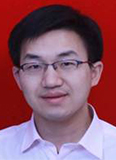
Assoc. Prof. Hai Liu, Central China Normal University, China Research Area: Development of digital image processing and digital teaching system
Liu Hai, associate professor of the Artificial Intelligence Education Department of Huazhong Normal University, graduated from Huazhong University of Science and Technology with a doctor's degree in pattern recognition and intelligent systems. He has been engaged in self-regulated learning, learning resource recommendation, knowledge mapping, computer vision, machine learning and other fields for a long time. He was selected into the 2016 "Xiangjiang Scholars" Talent Plan and went to the Robot Vision Laboratory of City University of Hong Kong for two years. More than 40 academic papers have been published in IEEE TNNLS, TII, TMM, TKDE and other well-known journals at home and abroad, including 14 IEEE trans series of the first district of the Chinese Academy of Sciences, and 8 papers have been selected as high cited papers of ESI. It applied for or authorized 28 national invention patents, presided over 4 National Natural Science Foundation projects, and 1 sub project of the "Fourteenth Five Year Plan" national key research and development plan. He has won the first prize of Science and Technology Progress Award in Hubei Province (2020) and the first prize of Science and Technology Progress Award (2019) for outstanding achievements in scientific research in colleges and universities.
Title:Fine-grained Image Classification models via Transformers Network
Abstract:
In this talk, we will report the topic of the fine-grained image classification models via Transformers network. This report is based on our two recent study (IEEE TMM, 2023, CVPR 2023). Firstly, fine-grained bird image classification (FBIC) is not only meaningful for endangered bird observation and protection but also a prevalent task for image classification in multimedia processing and computer vision. However, FBIC suffers from several challenges, such as bird molting, complex background, and arbitrary bird posture. To effectively tackle these challenges, we present a novel invariant cues-aware feature concentration Transformer (TransIFC), which learns invariant and core information in bird images.
Secondly, head pose estimation (HPE) has been widely used in the fields of human machine interaction, self-driving, and attention estimation. However, existing methods cannot deal with extreme head pose randomness and serious occlusions. To address these challenges, we identify three cues from head images, namely, neighborhood similarities, significant facial changes, and critical minority relationships. To leverage the observed findings, we propose a novel critical minority relationship-aware method based on the Transformer architecture in which the facial part relationships can be learned.
|
|
|

| Assoc. Prof. Tingting Liu, Hubei University, China
Research Area: Artificial intelligence education application, learning analysis technology and classroom teaching behavior analysis
Tingting Lu, associate professor and master's supervisor of Wuhan University. In September 2016, he entered the National Research Center for Digital Learning Engineering Technology of Central China Normal University to study for a doctor's degree in education information technology, and in December 2019, he won a doctor's degree in engineering from Central China Normal University. He began to teach in Hubei University in October 2020. At present, the main research directions are artificial intelligence education application, learning analysis technology and classroom teaching behavior analysis. He has published more than 10 papers.
Title:Research on intelligent perception and recognition method for classroom interaction
Abstract: “AI+Education” has been developing into a new direction. For the evaluation of instruction and learning in classroom, the traditional way is no longer suitable which is based on the results of student examinations. The evaluation for classroom interactions now focuses on comprehensive variables based on big data from the learning process, machine learning and other new technologies. So far, the evaluation of classroom interaction is mainly based on the results and analysis of observation and questionnaires. This method consumes a lot of time and efforts with a low efficiency without timely feedback, which is not convenient for teachers to adjust instructional behaviors and strategies. Therefore, the main research goal is to accurately identify classroom interaction behaviors from the video and audio big data and provides an objective education process feedback.
|